

Trying to choose between Sigiriya and Pidurangala? This honest comparison breaks down cost, difficulty, views, crowds, mythology, and real experiences to help you decide which rock to climb — or why doing both in Sri Lanka is worth it.
If Sri Lanka is on your travel list, chances are you’ll soon come across two names that keep appearing everywhere — Sigiriya and Pidurangala. Both are massive rock formations located in the heart of the country, both promise incredible views, and both are often described as “must-visits”.
For first-time travellers, this can be confusing. Are they the same place? Do you need to visit both? And if you have limited time, which one is actually worth climbing?
This guide breaks it down simply — what Sigiriya and Pidurangala are, how the experiences differ, and how to choose the one that fits your travel style best, without the hype or assumptions.
What surprises most travellers is how close they are to each other. Sigiriya and Pidurangala are barely 2 kilometres apart, — yet the experience of climbing each is completely different.

Distance from important cities:
- From Colombo: approx. 170 km (5–6 hours by road)
- From Bandaranaike International Airport (Colombo Airport): approx. 160–170 km
- From Kandy: approx. 90 km
- From Dambulla: approx. 15–20 km
Most travellers visit this region as part of a loop covering Sri Lanka’s cultural heartland, often staying in or around Sigiriya, Dambulla, or nearby villages.
Sigiriya vs Pidurangala: Direct Comparison
| Factor | Sigiriya Rock Fortress | Pidurangala Rock |
|---|---|---|
| Location | Near Dambulla, Central Sri Lanka | Same area, just ~2 km from Sigiriya |
| Type | Ancient royal rock fortress | Natural rock + former monastery site |
| Historical Significance | Very high – UNESCO World Heritage Site, 5th-century palace | Moderate – Has a Buddha staute and place of worship at the begining of the climb |
| Climb Difficulty | Easy to moderate (steps, railings, organised path) | Moderate (uneven paths + final rock scramble) |
| Time Required | 2–3 hours including exploration | 1–1.5 hours |
| Views | Views from the rock over gardens and plains | Best views of Sigiriya and open landscapes |
| Crowds | Usually crowded, especially mid-morning | Fewer crowds, quieter experience |
| Best Time to Visit | Early morning to avoid heat and crowds | Sunrise or sunset |
| SAARC Entry Fee | Approx. USD 20 | Approx. LKR 500–1,000 |
| Non-SAARC / Foreigners Fee | Approx. USD 30–35 | Approx. LKR 500–1,000 |
| Value for Money | High for history lovers, expensive otherwise | Very high for views and simplicity |
| Overall Experience | Structured, historical, iconic | Raw, scenic, experiential |
Quick Takeaway for First-Time Travellers
- Choose Sigiriya if history, architecture, and UNESCO sites matter to you.
- Choose Pidurangala if you want the best views especially of the Sigiriya fortress, fewer crowds, and a budget-friendly climb.
- If time and energy allow, doing both gives you the full perspective.
Sigiriya Rock Fortress
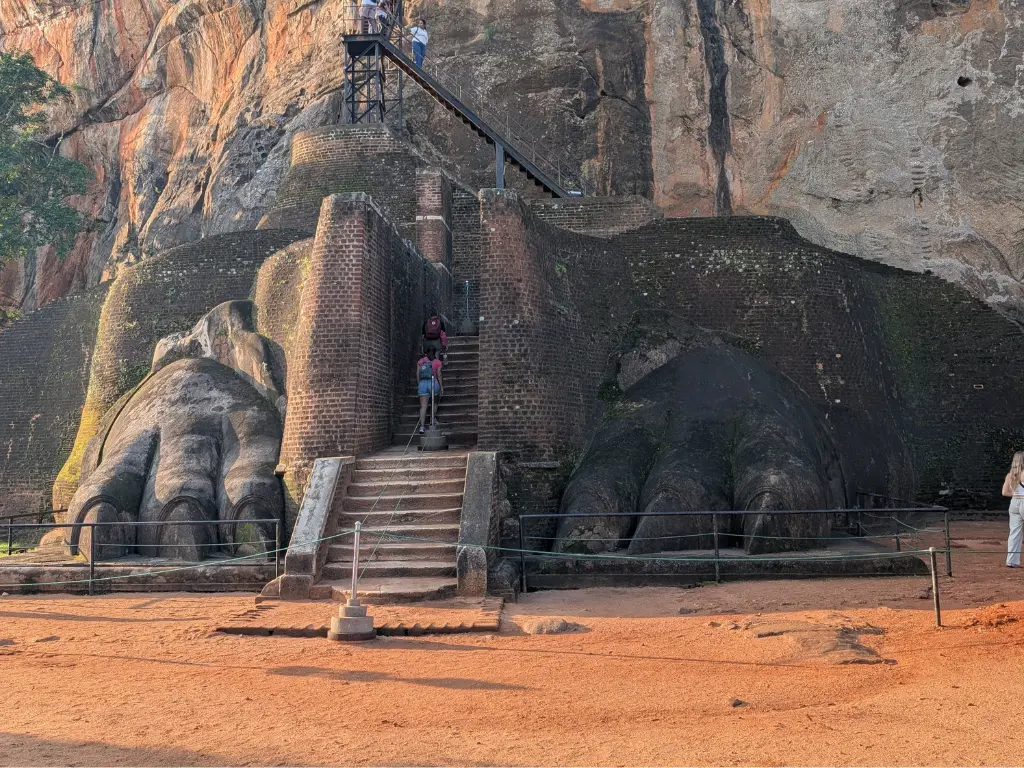
Sigiriya or Lion Rock is one of Sri Lanka’s most famous landmarks and often the first place travellers hear about when researching the country. It is an ancient 5th-century rock fortress, built by King Kashyapa, and today recognised as a UNESCO World Heritage Site.
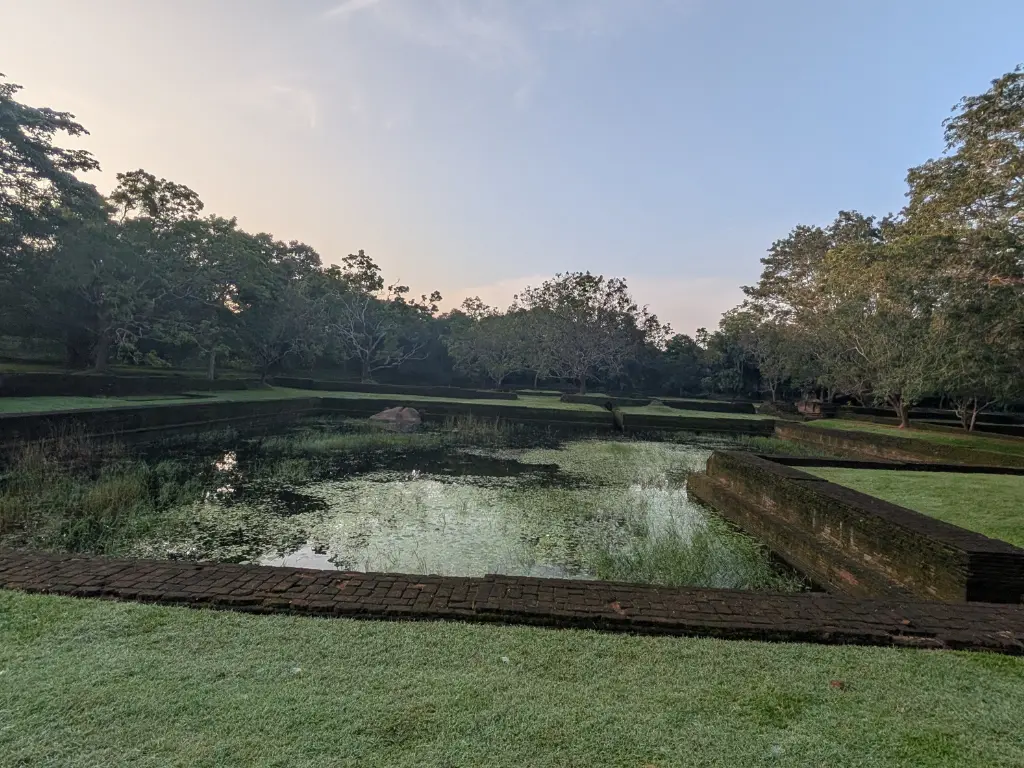
The climb is structured and carefully planned. You walk through symmetrical gardens at the base, pass historic frescoes painted on the rock face, and ascend via staircases to the ruins of what was once a royal palace at the top. There are about 1200 steps and it takes about 2-3 hours to explore. Sigiriya is as much about history and architecture as it is about the view, making it a landmark-driven, information-rich experience.One of the most fascinating parts of Sigiriya lies at its base — the royal water gardens. Designed over 1,500 years ago, these gardens use a sophisticated hydraulic system. The symmetrical pools, underground channels, and water fountains are considered among the oldest landscaped gardens in South Asia, and they quietly set the tone for how advanced this site once was.
Sigiriya is also often linked to Ramayana mythology. Local belief suggests that the area around Sigiriya was once part of Ravana’s kingdom, and the rock itself is sometimes associated with Ravana’s stronghold. While this connection isn’t archaeologically proven, it’s a story you’ll hear repeatedly from locals — and it adds a layer of cultural intrigue as you walk through the ruins.
Pidurangala Rock
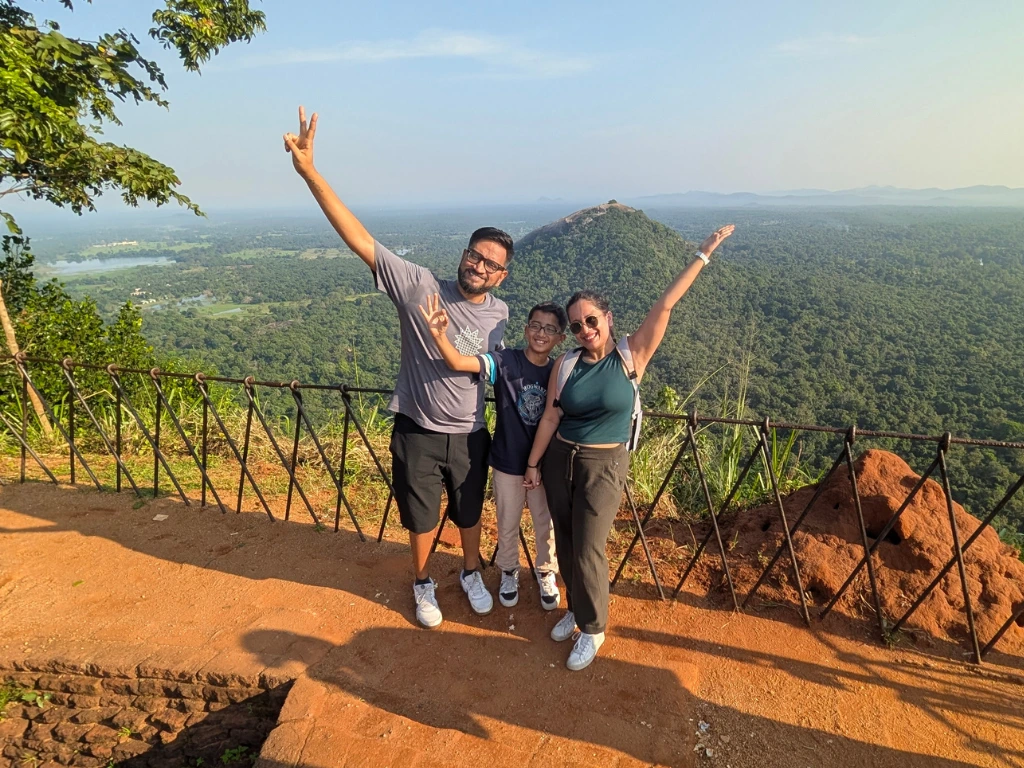
Pidurangala sits quietly nearby and is often overlooked by first-time visitors. Historically, it served as a monastery complex, built to house monks who were relocated during the construction of Sigiriya. A small temple and a reclining Buddha statue still mark the base of the rock.
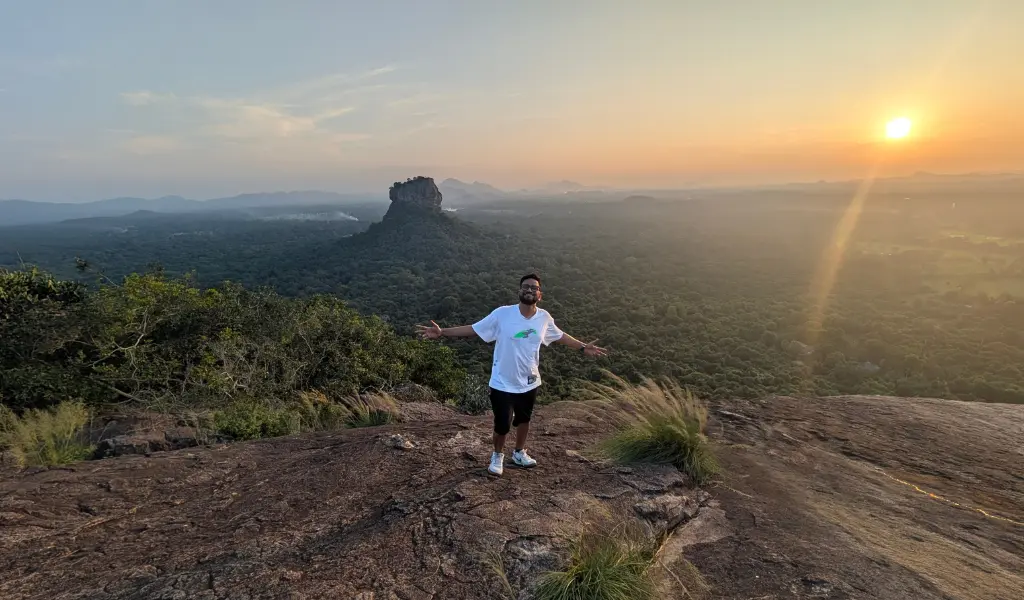
The climb here is more natural and less managed, involving uneven paths and a short scramble near the top. What makes Pidurangala especially popular is the viewpoint — from the summit, you get a sweeping, open view of the surrounding landscape with Sigiriya rising dramatically in front of you. The experience feels simpler, quieter, and more physical.
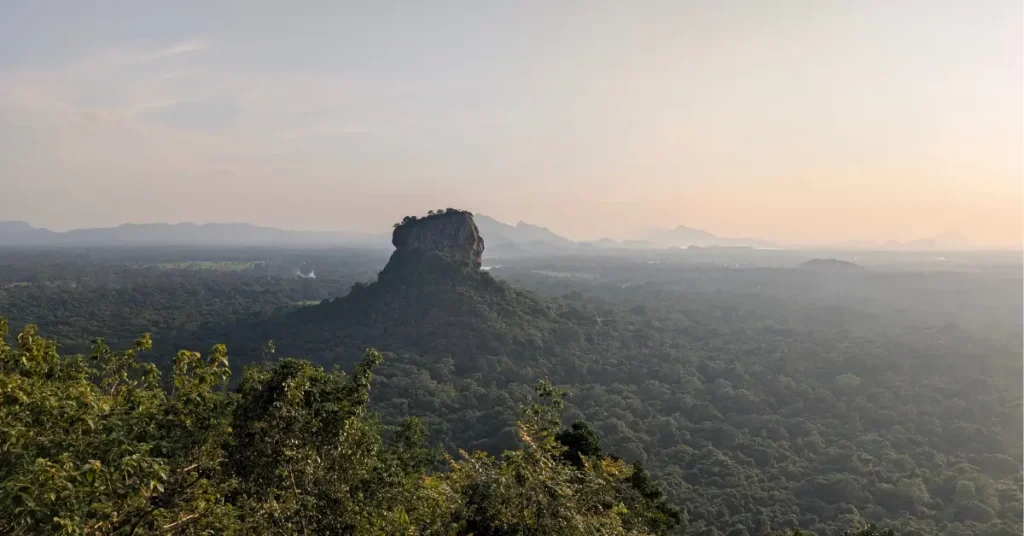
Doing Both: Our Experience with Pidurangala & Sigiriya
We chose to do both climbs, and honestly, that felt like the best decision.
We climbed Pidurangala for sunset, and while the views were absolutely worth it, the final stretch of the climb was genuinely challenging. The last section involves scrambling over large rocks, and it’s not something to take lightly — especially as the light fades. Our driver kindly climbed with us and helped guide us through the toughest part, which made a big difference. It’s doable, but it demands caution and support if you’re not used to such climbs.
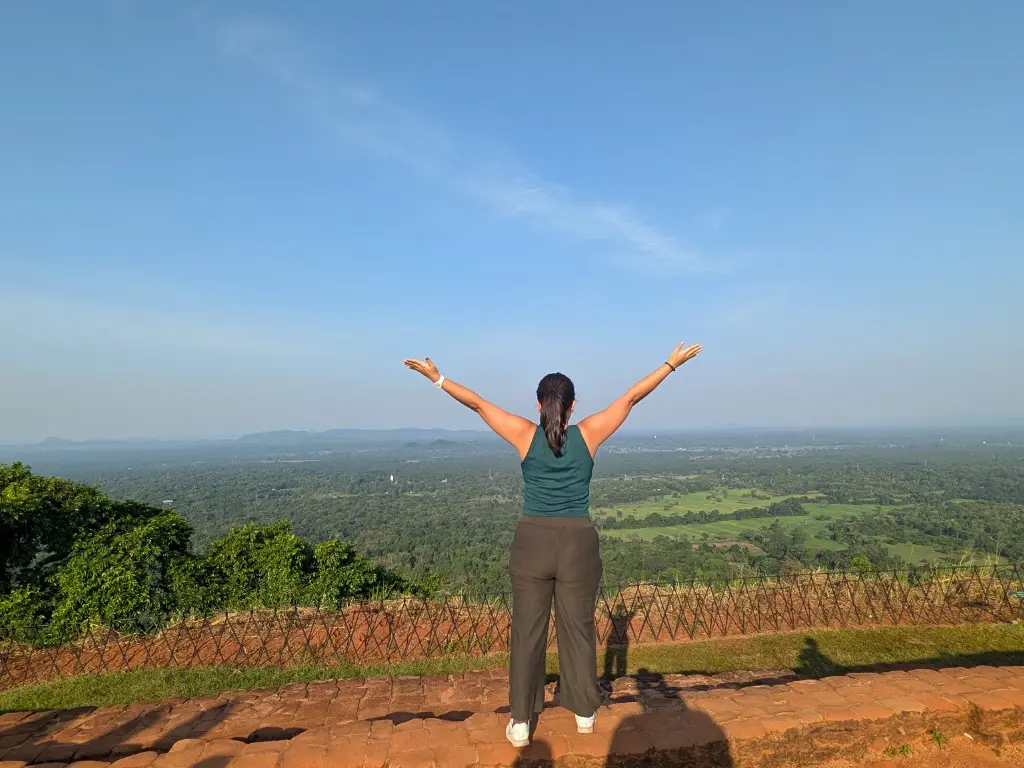
The next morning, we did Sigiriya at sunrise, and the experience felt completely different — calmer, cooler, and more structured. However, despite reaching early, we still faced long queues. Ticketing at Sigiriya can be unpredictable. Online booking is sometimes available and sometimes not, depending on technical issues, and on our visit, we had to wait in line for quite a while.
👉 Based on our experience, it’s best to reach between 6:00 and 6:30 am to avoid heat, crowds, and long delays.
Booking Reality: What to Know Before You Go
- Pidurangala:
There is no online booking option. Tickets are purchased on-site near the temple entrance. - Sigiriya:
Online booking exists but isn’t always reliable. Even with early arrival, queues are common, especially in the morning.
Tip: Planning buffer time here really helps.
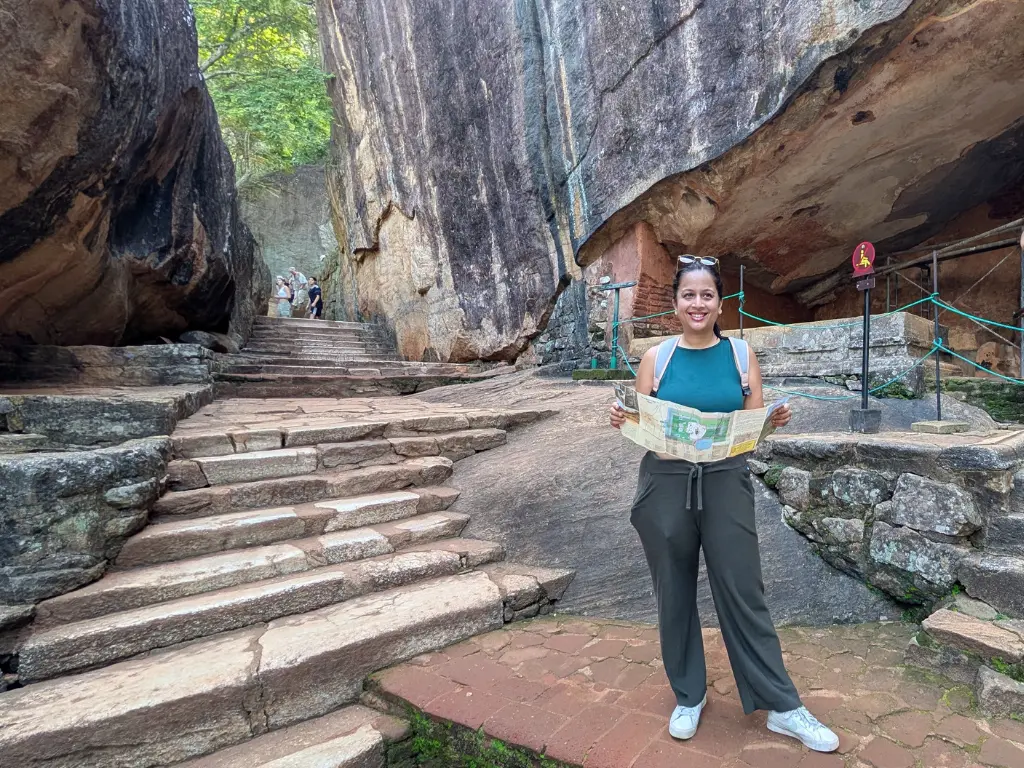
Where We Stayed: Liyara Homestay
We stayed at Liyara Homestay, and it turned out to be one of the most comforting parts of the trip. The space was cozy, clean, peaceful, affordable and close proximity to both rocks. Not to mention that the hosts were genuinely warm and helpful. After physically demanding climbs, coming back to a quiet, welcoming place made a noticeable difference.
If you’re considering staying near Sigiriya, a homestay like this offers a more personal experience than larger hotels.
Final Thoughts:
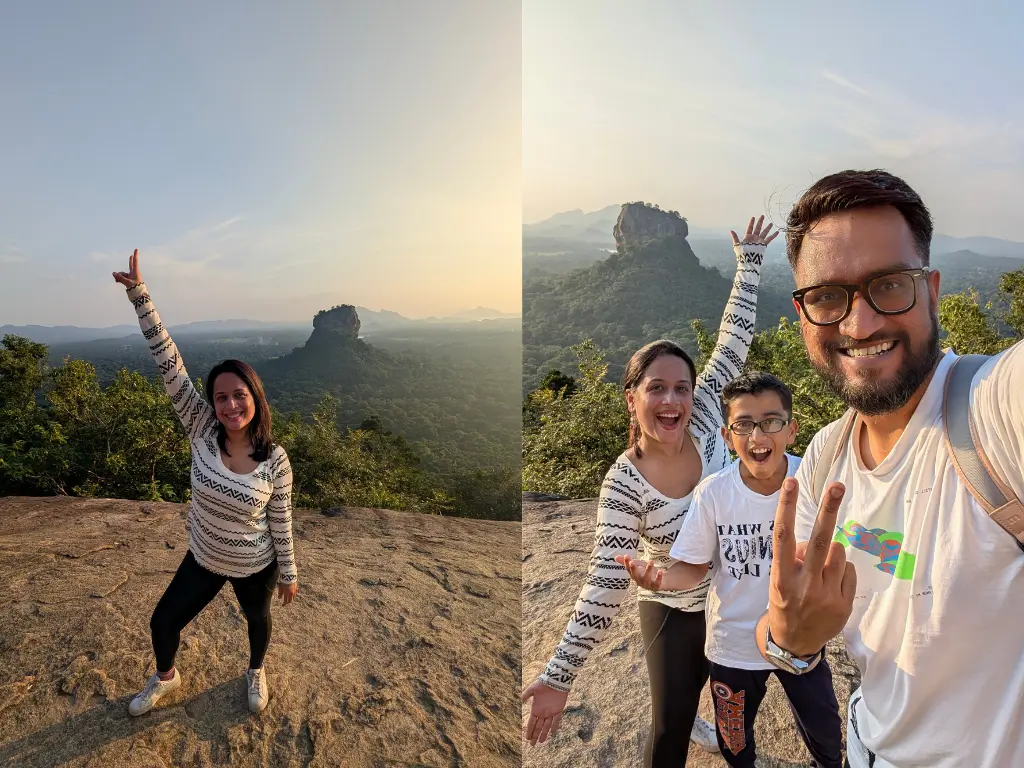
Sigiriya and Pidurangala may rise from the same landscape, but they leave very different impressions. One tells its story through ruins, gardens, and centuries of history; the other through silence, effort, and a view that stays with you long after you climb down. Watching the sun set from Pidurangala and rise over Sigiriya felt like seeing the same place through two moods.
If you’re visiting this part of Sri Lanka, don’t think of it as choosing between the two. Think of it as slowing down enough to experience both — the climb, the wait, the tired legs, and that quiet moment at the top when everything feels worth it.
Planning a Sri Lanka Trip?
If you’re planning a longer trip, I’ve shared a detailed 10-day Sri Lanka itinerary covering hill towns, beaches, wildlife, and cultural stops — designed especially for first-time travellers.



Leave a reply